Energy-Efficient Windows in Denver
Explore windows built for a mile-high climate. Enjoy comfortable room temperatures, lower heating and cooling bills and less fading from the Colorado sun—without sacrificing comfort.
Receive Your 100% Free Estimate
Enjoy lower energy bills with Window World
"*" indicates required fields
Table of Contents
Understanding Energy Efficiency
An energy-efficient window slows the flow of heat through the glass, the frame and the gaps surrounding it. Four components do most of the work:
- Low-emissivity (Low-E) glass coatings
- Insulated double-pane or triple-pane glass units
- Multi-chamber frames
- Professional installation.
Window performance is rated by the National Fenestration Rating Council (NFRC). In Denver, the two ratings that matter most are U-factor, which measures how well a window holds heat in, and Solar Heat Gain Coefficient (SHGC), which measures how much of the sun’s heat it lets through. Since January 1, 2026, every residential window sold in Colorado must have a U-factor of 0.30 or lower.


WINDOWS MADE FOR DENVER
What A Mile-High Climate Asks of Your Windows
A window that performs well on the East Coast isn’t automatically the right window for your home in Denver. Our mountain climate requires your window glass and frames to:
- Hold heat through cold nights. Denver winters mean chilly nights, and a sufficient U-factor rating keeps heat inside your home.
- Use the sun’s warmth without overheating. Sunny winter days can warm south-facing rooms for free, while west-facing glass can overheat by late afternoon in summer. SHGC controls that balance, so the right glass can differ from window to window.
- Stand up to intense sun. At 5,280 feet, sunlight is stronger. Low-E coatings work like sunscreen and cut the UV and infrared light that overheat your home and fade floors, furniture and window treatments.
- Stay sealed at altitude. Insulated glass built at lower elevations has to handle the pressure change of a mile-high install. How are our windows built for your elevation?
- Remain clear in winter. Condensation or frost on the inside of cold glass points to high indoor humidity. Fog between the panes means the seal has failed.
The Technology
Science Behind The Savings
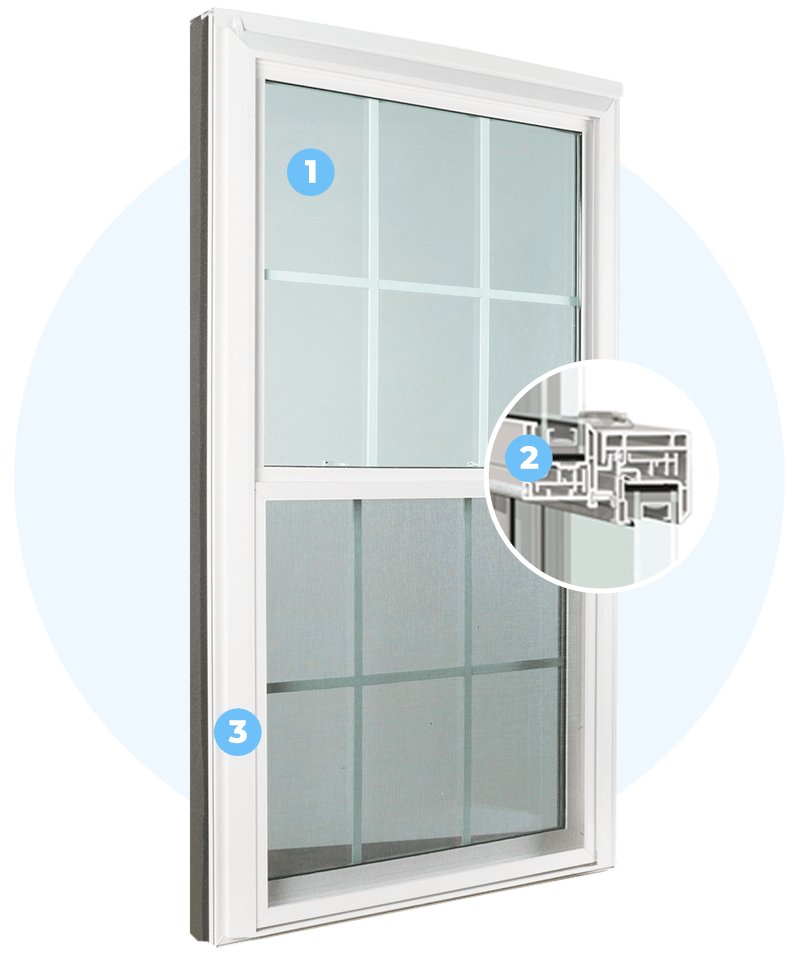
Windows
 Low-E Glass
 Low-E Glass
Low-E glass is a microscopic coating that reflects radiant heat back to the source. It keeps heat inside in winter and reflects the sun’s heat outside in summer, blocking most harmful UV rays.
Warm-Edge Spacers
 Warm-Edge Spacers
Intercept™ warm-edge spacers seal the edge of the insulated glass unit with a low-conductivity channel. This keeps the glass edge warmer, reducing condensation along the frame.
Multi-Chamber Vinyl Framing
 Multi-Chamber Vinyl Framing
Vinyl window frames are constructed with a complex array of compartments to help trap and repel unwanted weather.
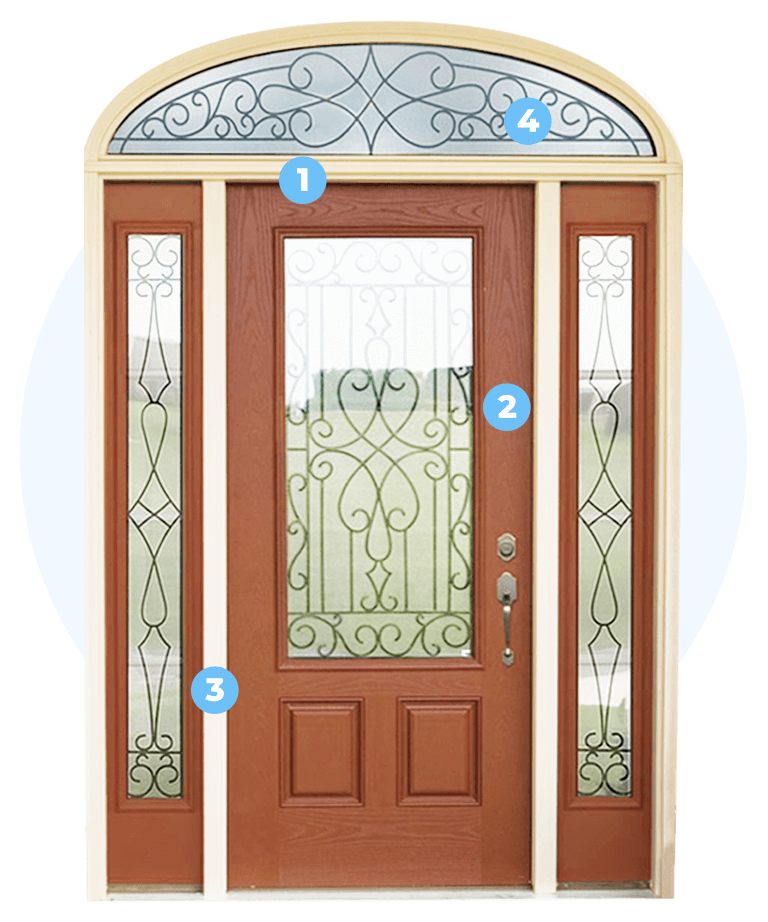
Doors
Innovative Weatherstripping
Airtight weatherstripping seals the sides, top and bottom frames of your door to prevent air infiltration.
Insulated Core
An insulated polyurethane core provides an additional thermal barrier.
Sturdy Frames
Composite frames resist rotting, rusting and warping to withstand constant exposure to the elements.
Energy-Saving Door Lites
 Energy-Saving Door Lites
Decorative and ENERGY STAR-compliant door lites that allow light in but keep the elements out.
Energy Calculator
Calculate Your Energy Savings
How much is your monthly energy bill? Slide to determine your predicted savings.
*Based on figures provided by Energy.gov
Climate Requirements
ENERGY STAR® and Colorado’s Window Standards
ENERGY STAR is a government-sanctioned symbol for energy efficiency, credibility, sustainability and cost-savings for the consumer. Browse below to explore what’s required to become ENERGY STAR-certified and what it looks like in Colorado.
Colorado sets a minimum standard for every window sold in the state. Under HB23-1161 and Colorado Department of Public Health and Environment rule (5 CCR 1004-2), residential windows sold after January 1, 2026, must have a U-factor of 0.30 or lower. The same limit applies to doors that are more than half glass. Skylight U-factors must be 0.50 or lower.
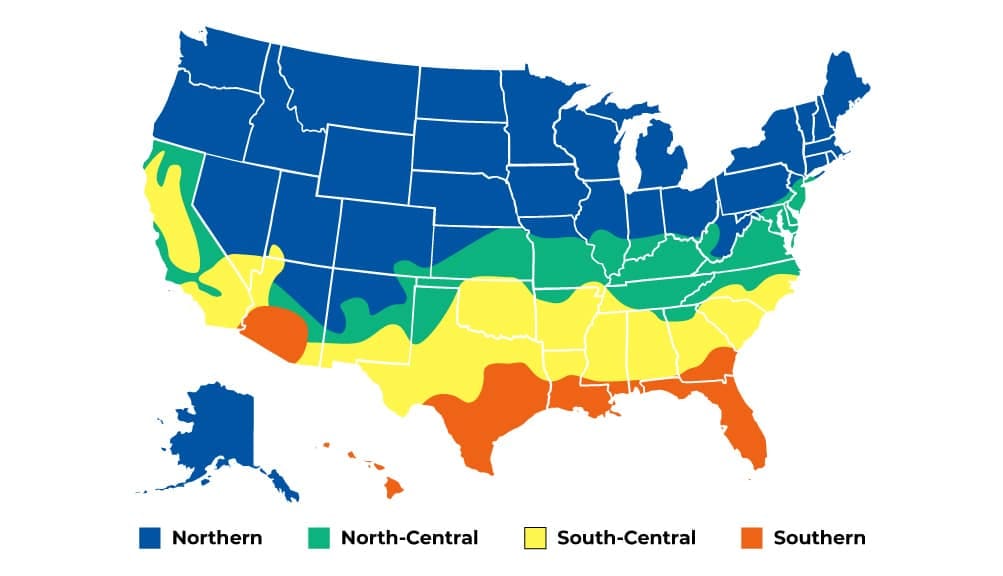
ENERGY STAR sets a higher bar. Denver sits in ENERGY STAR’s Northern climate zone, where certified windows need a U-factor of 0.22 or lower. If your window lets in more of the sun’s heat because of its placement, an equivalent-performance path allows for a slightly higher U-factor.
U-factor measures the rate at which heat flows through an object. The lower your U-factor, the less heat your windows allow through.
| Standard or Zone | Max U-factor | SHGC |
| Colorado state minimum (from Jan 1, 2026) | ≤ 0.30 | No requirement |
| ENERGY STAR v7.0 — Northern (Denver) | ≤ 0.22 | ≥ 0.17 (tradeoff path allows higher U with higher SHGC) |
| ENERGY STAR v7.0 — North-Central | ≤ 0.25 | ≤ 0.40 |
| ENERGY STAR v7.0 — South-Central | ≤ 0.28 | ≤ 0.23 |
| ENERGY STAR v7.0 — Southern | ≤ 0.32 | ≤ 0.23 |
Every certified window carries an NFRC label with up to five ratings. Here’s what each one means for a Denver home.
| Rating | What It Measures | Better is… |
| U-Factor | Rate of heat loss (typically 0.20–1.20) | Lower |
Solar Heat Gain Coefficient | Share of the sun’s heat let through (0–1) | Lower on west/summer exposure; higher helps passive winter heat |
Visible Transmittance | Share of visible light let through (0–1) | Higher = more daylight |
| Air Leakage | Air passing through the unit (cfm/ft²) | Lower |
| Condensation Resistance | Ability to resist interior condensation (1–100) | Higher |
YOUR IDEAL WINDOW IS WAITING
Find the Right Energy-Efficient Window for Your Home
The most efficient window is the one that best matches your home’s age, orientation and the openings you’re replacing. What does your home need the most? Start with the questions you’re already asking.
Not sure where to start? We can help.
AFFORDABLE PRICING FOR COLORADANS
What Determines the Cost of Energy-Efficient Windows?
Every Window World of Denver project receives a custom quote based on your specific home and needs, so there’s no single sticker price. The number isn’t a mystery, though. Five factors affect it, and we walk through each one at your free in-home estimate.
- Number and size of openings: More and larger windows mean more materials and more labor.
- Window style: Non-fixed, operational styles like casements and double-hung windows cost more than fixed picture windows.
- Glass package: Upgraded Low-E coatings, gas fill and triple-pane glass add cost and pay off in better performance.
- Installation method: An insert fits the existing frame. A full-frame replacement removes it down to the rough opening.
- Site conditions: Rot, existing structural damage, trim work, second-story access and older construction can all change the scope of installation.
Frequently Asked Questions
Four additions make windows energy-efficient: a Low-E glass coating that reflects heat, a sealed insulated glass unit with a warm-edge spacer, an insulated multi-chamber frame and professional installation. The NFRC label on each window can confirm strong energy performance, with U-factor and SHGC being the key ratings.
Since January 1, 2026, residential windows sold in Colorado must have a U-factor of 0.30 or lower (see rule 5 CCR 1004-2). ENERGY STAR-certified windows for Denver’s Northern climate zone must reach 0.22 or lower.
Absolutely, especially if you’re replacing single-pane or failing windows. ENERGY STAR estimates certified windows lower energy bills by an average of up to 13% when replacing single-pane windows, and they also improve comfort and reduce fading from Colorado’s strong sun.
Low-E glass in a sealed, insulated unit sets you up with a solid foundation. Beyond that, the best glass depends on the window’s orientation: lower SHGC for hot west- and south-facing exposures, and a balanced SHGC where winter sun can help heat your home.
Yes. Insulated glass units have to handle the pressure difference between where they’re built and where they’re installed. Some manufacturers use capillary tubes at high elevation, which can affect gas fill. While you’re researching, ask installers how their windows are built for Denver’s elevation.




Our Proven track record
What Your Neighbors Are Saying

We can only recommend Window World in the highest possible way to everyone who needs window replacement…And now, with the job finished and our beautiful, energy-efficient windows installed, we are so happy and assured that this company was the right choice.


I am very happy with our new windows from Window World. Shon was very accommodating on getting us quotes and working with us financially on different payment options. The installers were on time and very quick! We are excited to reap the benefits of energy efficient windows!!

I wish I knew of Window World when my other windows needed replacement from hail damage. I saw a noticeable difference in quality and price. For the same or less, you have double-hung windows (can open top or bottom…instead if single-hung which only opens at the bottom), energy-efficient, less glare windows. Just overall top quality.
Your Free Estimate is Waiting
Free, No Obligation
Upgrade Your Home With Us!
Request Your Free Estimate
Call today or fill out the form to receive your free, in-home estimate. A Window World representative will be in touch with you to discuss setting up an appointment that fits best with your schedule.
Call us today for your free estimate or simply click the button below.
Free, No Obligation
Request Your
Free Estimate
"*" indicates required fields